


From the earliest days of iron metallurgy, blades—be they long, short, or unexpectedly hefted like an axe—have been more than serrated steel. They have served simultaneously as tools and as bilateral channels of intent, speaking of the maker, the beholder, and the horizon of metaphysics that each skirmish or settlement, each sacrificial rite or royal proclamation, imposed upon their users. For the collector, the private enthusiast, and the museum curator alike, an idle reverence for the sharp-edged past broadens into acute cognizance whenever an iron fragment detonates its latent history upon ocular inspection.
For millennia the axe has been the cleaver of ordinary wood and the cleaver of mythology alike, an icon that tallies the intersecting registers of divinity and human aspiration. Designated not only for carnage but for cosmological coherence, the tool molds and channels the forces of the heavens into the grip of an embattled or exalted citizen.
The axe, in consequence, becomes at once blood-sated tool and sovereign sigil, a vitrochrome dropped into the otherwise monochromatic history of implements, offering to the present the awkward assurance that divine authority and pulse of citizens have, millennia of steel breath, amplified each other into moment after another.
Knives have long transcended their utilitarian function in myth and rite:
Collectors sensitive to these idioms recognize how the humblest cutter holds, in its patina and polished chape, an arch of custom, valor, and expectation.
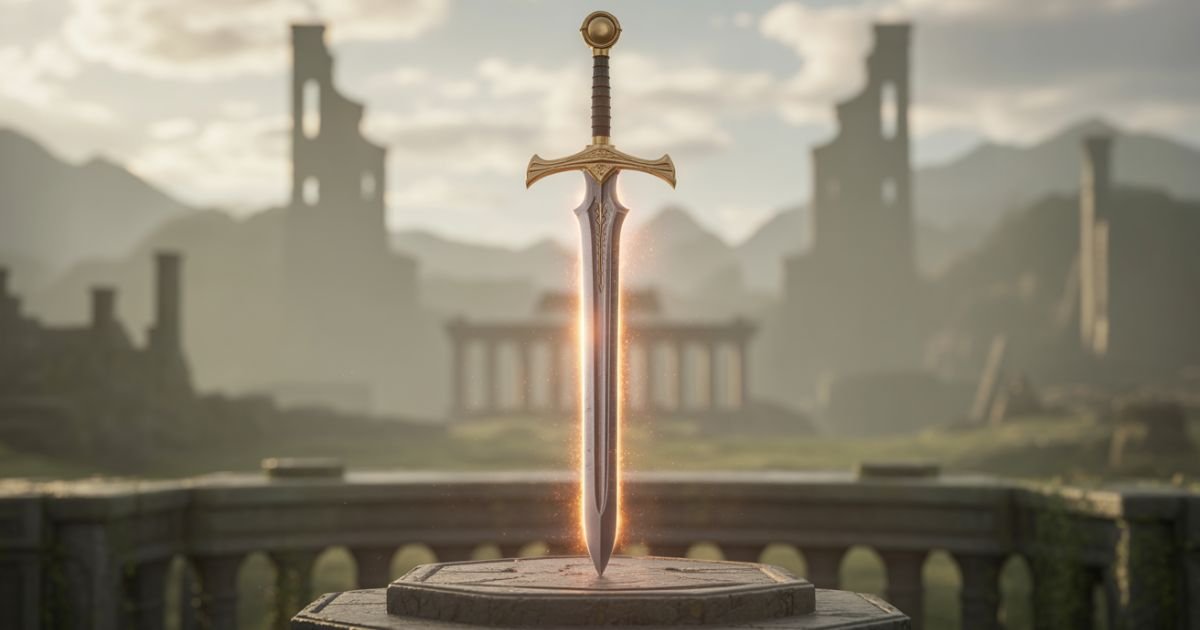
Among weaponry, the sword stands pre-eminent in the narrative corpus of high culture:
Through these legends, the blade was wrought into emblematic fabric—justice, honor, and a teleology greater than the iron itself.
For the informed collector, sword, axe, and knife alike cease to be mere material; each is an archive. Authenticates who read the idioms of the axe as readily as the chivalry of the sword, and who recognize in a blade of the Ojibwa rites the antecedents of the Japanese tatara, convert the passive gaze of ownership into dynamic communion.
Ownership thus becomes the quiet, sustained act of stewardship; each acquisition is a looping encounter with venerations of valor, devotion, and the self lived beyond form and cross-section.
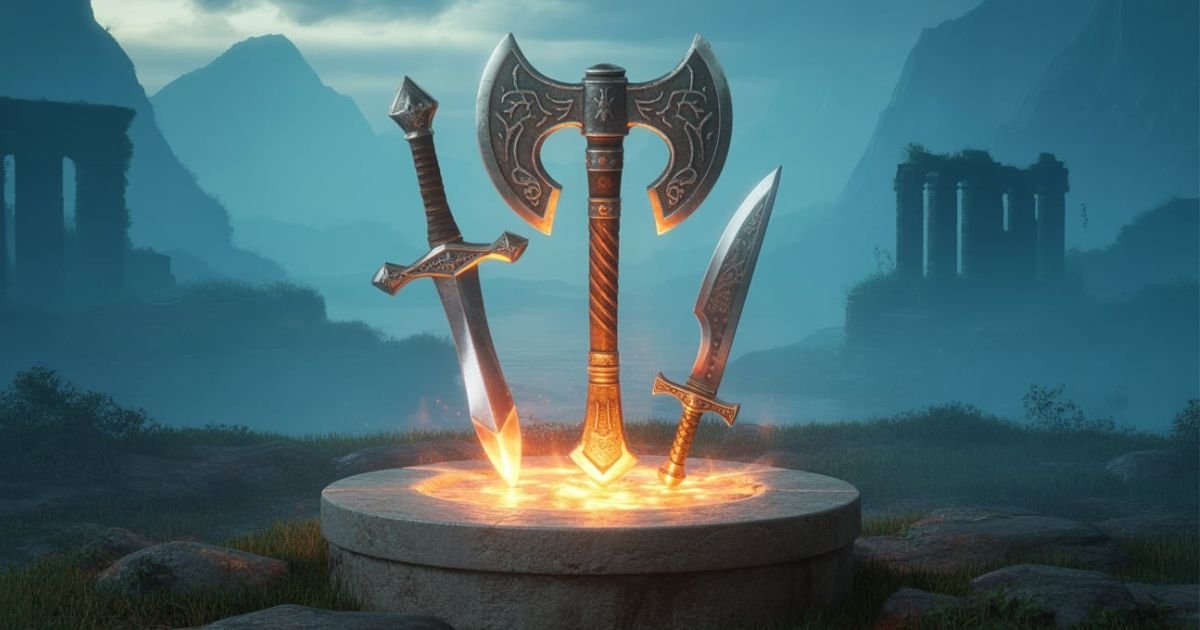
From the bearded axe of the Viking warrior to the ornamental dagger of the court and the fabled Excalibur, edged weapons in myth transcended mere metallurgy. They became emblems of fidelity, valor, and the transcendent. Connoisseurs who grasp the deeper significance embedded in these forms of steel can not only acquire fine artifacts but also carry forward the very narratives that forged empires.
For the seeker of a distinctive testament to antiquity, the selectively assembled trove at Mythic Swords awaits. Examine the inventory and situate a shard of the past in your own exhibition.
No account yet?
Create an Account